Start here
Travel health admin: the four things that actually matter before you fly
Travel health preparation is four separate systems that people routinely mistake for one. Vaccines protect you. Insurance pays. The GHIC gets you treated on local terms in some countries. Your own medicines need paperwork of their own. Confusing any two of these is where trips go expensive.
In short
- A GHIC is not travel insurance and never covers getting you home.
- Some travel vaccines are free on the NHS, most of the specialist ones are not.
- Undeclared pre-existing conditions are the most common reason a claim is refused.
- Prescription medicines need their original labelled packaging and, for some countries, documentation.
1. Vaccinations: what protects you
Which vaccines you need depends on the country, the region within it, the season, how long you are staying and what you will actually be doing. Two weeks in a city hotel and two months working outdoors in the same country produce different answers. The starting point is a risk assessment with your GP practice or a travel clinic, not a list from a forum.
A small group of travel vaccines is free on the NHS. Most of the specialist ones are not, and yellow fever can only be given at designated centres. The split is set out in our NHS versus private comparison.
2. Travel insurance: what pays
Insurance is the only one of the four that covers the genuinely catastrophic costs — repatriation, air ambulance, an extended hospital stay, cancelling the trip because you became ill before departure. An air ambulance back to the UK can run to tens of thousands of pounds and nothing else in this list will pay for it.
The single most important action is declaring pre-existing conditions honestly at the point of purchase, including conditions that feel resolved or trivial. Non-disclosure is the standard reason claims are refused, and the refusal usually applies to the whole claim rather than to the undeclared condition alone.
3. The GHIC: what gets you seen
The UK Global Health Insurance Card gives you access to medically necessary state healthcare in the EEA and some other countries, on the same terms as a resident of that country. It is free from the NHS, lasts up to five years, and covers only the named holder — children need their own.
Two things it is not. It is not insurance: it does not cover repatriation, private facilities, mountain or ski rescue, cruise ship medical centres, cancellation or lost baggage. And it is not global despite the name: it does not apply in the United States, Canada, most of Asia or many other destinations. If your EHIC has not yet expired, keep using it until it does.
4. Your own medicines: what needs paperwork
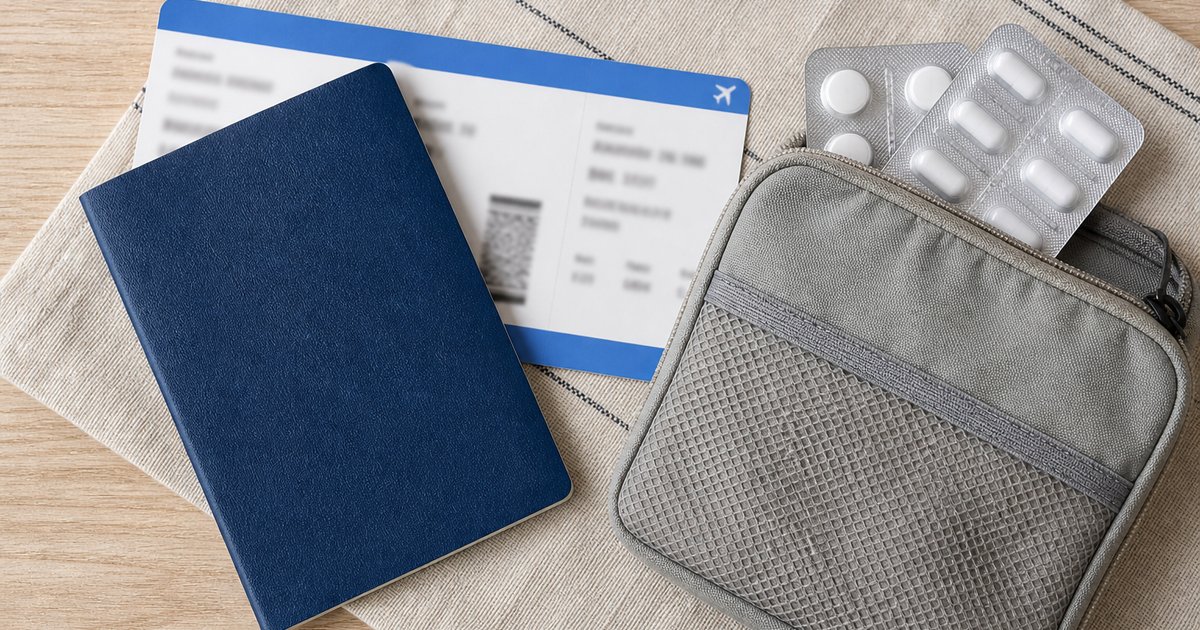
Take enough for the whole trip plus a margin, keep everything in its original packaging with the pharmacy label attached, and carry it in hand luggage. Ask your GP or pharmacist for a printed list of your medicines with their generic names — brand names differ between countries and a generic name is what a foreign clinician can actually work with.
Some countries restrict or ban medicines that are entirely routine in the UK, including certain painkillers, sleep aids and stimulant medications. This catches people out every year. Check the destination's rules through its embassy before you pack, and allow time: some countries require a permit applied for in advance.
Where the gaps are
| Need | Vaccines | GHIC | Insurance |
|---|---|---|---|
| Preventing illness | Yes | No | No |
| State treatment abroad | No | In participating countries | Usually |
| Private hospital abroad | No | No | Depends on policy |
| Repatriation to the UK | No | No | Yes |
| Cancelling before you go | No | No | Yes |
Read the middle column carefully. Everything the GHIC does not do, insurance has to. This is why the standard advice is to carry both, and why carrying only one is a specific and expensive mistake.
Start six weeks out
The name of this site is the lead time that makes everything else possible. Vaccine courses need weeks to complete and days to take effect; the yellow fever certificate is not valid until ten days after the dose; a GHIC arrives by post. Booking late does not merely reduce protection, it removes options. The full schedule is in the twelve-week countdown.
Common questions
Do I need a GHIC if I have travel insurance?
Carry both. Many insurers reduce or waive the excess if you used a GHIC, and some policies expect you to use state healthcare where it is available.
Is the GHIC valid in Switzerland or Norway?
Arrangements outside the EU differ, and the country list changes. Check the current list on the NHS site before you travel rather than assuming.
What if I lose my card abroad and need treatment?
You can apply for a Provisional Replacement Certificate, which gives the same cover as the card itself.
Does the NHS cover me if I fall ill abroad?
No. NHS treatment is not portable. Once you leave the UK you are relying on the GHIC, insurance, or paying.